

本站推荐电影
-
·Rajinikanth Receives Lifetime Honour At IFFI
·(活力中国调研行)鲁北小城“智造”全球三成商用健身器材,(活力中国调研行)鲁北小城“智造”全球三成商用健身器材
·托起幸福“夕阳红”_养老_服务
·政声直达|河北24项高频海事政务事项下月起将实现全省通办
·《龙餐馆》罗永浩看泪崩:生平第一次 人多哭得放不开
·Britney Spears Defends Raunchy Nude Pics After Her Body Was 'Manipulated, Abused & Torn'
·浙江省发出今年第2号指挥长令
·广州塔1小时内连续6次接闪电 华南强降雨何时减弱?
·商业综合体连通地铁站 地下商街全面升级焕新
·卓胜微:上半年亏损3.71亿元
·利物浦3:1胜曼城夺得社区盾杯冠军
·杭州地铁9、16、19号线高架段临时停运公告
·“三五”规划正式公布 澳门迈向高质量发展新阶段
·《蔚蓝档案》开发者二次元新作正式定名为《Fareidolia》
·马塔担任颁奖嘉宾,为老队友B费颁发PFA赛季最佳球员奖杯
本站推荐电视剧
-
·明珠公园新增一处童趣空间 点亮市民幸福生活
·漳州消费品以旧换新下乡村活动走进台商投资区
·在韩失联一中国留学生已遇害,嫌犯被抓获
·靑, 李대통령 지지율 첫 30%대 추락에 "민생·경제 실질적 성과 위해 최선"
·US Investigators Examine Bullet That Killed Reporter Shireen Abu Akleh
·智元灵犀X2获得机器人运动会100米障碍赛决赛冠军
·政声直达丨“京东号”电商集装箱班列首次开行
·万亿低空经济,迎来大爆发
·新赛季首金!中国泳坛王牌之师夺冠,男女混合团体不敌俄罗斯队
·浙江省防汛防台抗旱指挥部发布今年第2号指挥长令
·40℃的伏天,这茶一入口:香、透、清、亮、鲜、灵、甜、妙!你就喝吧,一喝一个不吱声
·刮刮乐五彩钻&耀出彩在重庆再上新!最高奖金100万元
·韩国KOSPI指数开盘下跌0.2%
·8月25日中国人民银行开展3860亿元7天期逆回购操作
·【IT家居开放组】苹果家居吊舱开箱图片欣赏:精致的小脂肪码头
电影下载排行
-
·特锐德:上半年归母净利润4.28亿元,同比增长30.73%
·隐藏式门把手,给整个汽车行业都上了一课
·India's Supreme Court Refuses Blanket Ban on Use of Bulldozer for Demolition Across States
·Global Smart Education Conference 2026 held in Beijing
·签字认可配偶借款 要承担还款责任吗?
·天空:桑德兰正全力推进马赛边锋伊戈尔·派尚的签约
·《Batman: Knightfall》第一部分现已上线供在线观看
·やってられません!年金月16万円・75歳妻、「働き損」に激怒。夫急逝で遺族年金「まさかのゼロ円」、高級老人ホーム退居の危機
·数智技术赋能河北数字经济高质量发展学术交流会在石家庄举行
·连山区青少年应急消防科普教育基地启动
·“钰”见雄安Vlog | 送雄安一号上太空
·暖“新”更暖心 托起新就业群体“稳稳的幸福”
·四川航空3U3838航班,凌晨紧急备降济南!
·孕妇因医生疏忽误服有毒液体,医院通报
·Beijing sees surge in cross-border travel during summer
电视剧下载排行
-
·Chiranjeevi, Venkatesh Scenes a Major Highlight in Mana Shankara Vara Prasad Garu
·永子为媒 棋连两岸
·普京重大任命!绍伊古任新职,俄国防部长将换人!
·银巴铁路开启静态验收 预计年底具备开通条件
·改革“林”距离 |从“守青山”到“兑碳金”——滦河林场的兴林富民记
·'JCB Prize for Literature' announces its most diverse shortlist in its 5th year
·伊朗总统称应摆脱非战非和状态
·India logs 2,786 new Covid cases
·外交部:敦促太平洋岛国论坛秘书处恪守一个中国原则
·离大谱!RTX 5090整机竟比单卡还便宜800块
·罗永豪回应朝宝的名字泰图:文豪的名字不会改变
·Air raid alert announced in Kiev
·王菲现身那英演唱会现场,坐在观众席开心摇晃荧光棒跟唱;宋丹丹、龚俊等明星纷纷现身
·报告称县域市场已成为中国零售增长的重要引擎,报告称县域市场已成为中国零售增长的重要引擎
·两部门针对海南广西广东启动防汛防台风四级应急响应
怪物岛
-
发布时间:2026-08-26
车震
PLA Navy's first-batch female shipborne pilot trainees pass daytime landing qualification tests, signaling mature pilot training system: expert_我的网站

A |
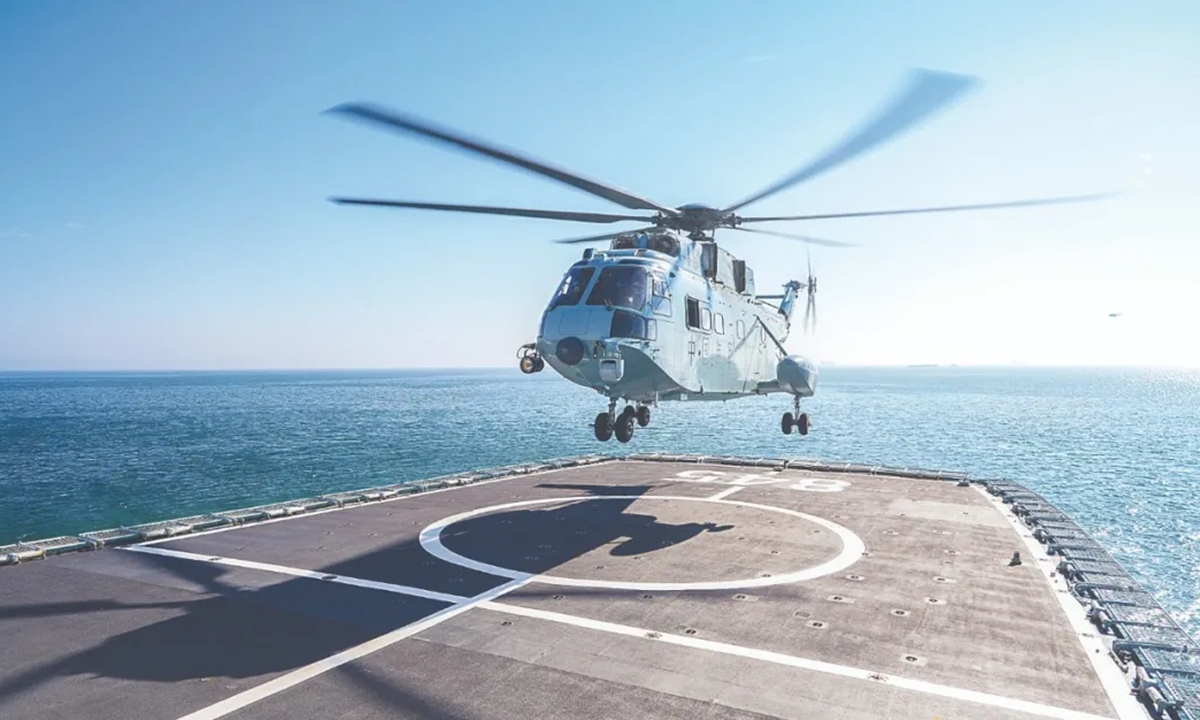
The progress of female pilot training is an important indicator of the maturity and systemization of the shipborne aviation talent selection and training system, a military affairs expert said. Smears by some foreign media about China's pilot training capabilities are, in essence, a projection of the West's own anxieties over talent shortages, the expert added.
"Night landings are tougher than I imagined. The entire sea is pitch black. It's hard to tell where the sea ends and the sky begins. It's very easy to become disoriented," said Han Meng, a female trainee pilot at the Naval Aviation University, in the CCTV News video.
"Completing today's landing mission has given me a clearer understanding of my own abilities. I'm about to graduate, and I feel more confident about heading to my post and carrying out various maritime and far-sea missions I'll be assigned," she added.
The CCTV News report showed that the assessment featured a Z-8 helicopter landing on the aft flight deck of a vessel.
CCTV reported on Friday that the first batch of female shipborne pilot trainees had all recently passed their daytime shipborne landing qualification assessments. Shipborne landing is a critical milestone in a shipborne pilot's development, often described as the "certificate" to real naval aviation. Passing this assessment marks a significant step in the PLA Navy's efforts to cultivate female shipborne aviation talent.
All pilot trainees, regardless of gender, must meet the same rigorous physical and psychological standards required for shipborne aviation. The successful qualification of these female trainees demonstrates that the selection and training systems are capable of identifying and developing top-tier talent based on capability, not gender, Zhang Junshe, a Chinese military affairs expert, told the Global Times on Sunday.
In recent years, the PLA Navy's shipborne aviation talent development has entered a new phase of system-of-systems operations, transitioning from "able to fly and land on ships" to "able to fight and operate jointly," PLA Daily reported on April 22.
Under the synchronized training objectives of developing pilots, combatants and commanders, new pathways for talent cultivation are being explored, including growth opportunities for shipborne fighter and helicopter pilots. Training programs are being optimized across all elements, support resources coordinated across all domains, and implementation advanced across all processes, forming a systematic, integrated talent development framework.
Zhang also mentioned that foreign media outlets have hyped claims of a "pilot shortage" in China or that "talent development cannot keep pace with equipment delivery." Such claims are largely based on selective data comparisons and misunderstandings of China's aviation development, essentially reflecting the West's own anxieties about talent.
First, foreign media outlets often simply compare the total number of licensed pilots in China with that of the US, ignoring differences in population size, the prevalence of aviation culture and historical development. China's nationwide selection process draws from a vast pool of candidates, ensuring high overall pilot quality and building a strong reserve of aviation talent, Zhang noted.
In July, the PLA Navy's 2026 pilot recruitment process was successfully completed. The average college entrance examination scores of admitted pilot trainees reached a record high. In recent years, through extensive outreach and publicity campaigns, enthusiasm among young applicants has continued to grow, with the recruitment pool expanding year by year.
The Navy's recruitment authorities have established carrier-based flight aptitude assessment platforms, introduced new testing technologies including virtual reality and biofeedback, and improved the comprehensiveness and accuracy of flight aptitude evaluations, said the PLA Navy.
Meanwhile, China has established a diversified training system encompassing academy training, airline-commissioned training and civilian supplementary pathways. Through general aviation development, China is expanding its civilian talent reserve and gradually narrowing the gap with leading aviation nations, the expert said.
Moreover, modern air warfare is a complex system undertaking, relying not only on the number of pilots but also on comprehensive system-of-systems support across strategic early warning, electronic warfare, command communications and ground maintenance. The leapfrog development of China's aviation equipment is built on overall improvements in comprehensive national strength and the aviation industrial system, rather than a simple linear increase in pilot numbers, Zhang added.
。

B |

US-based premium activewear and lifestyle brand Alo stepped up its expansion in China on Wednesday, launching an exclusive flagship store on Tmall while preparing brick-and-mortar stores in cities including Beijing and Shanghai, adding to a growing number of US consumer brands entering or expanding in the Chinese market.
With Chinese actress Zhao Lusi featured on its homepage, Alo's Tmall flagship store marks its first official sales channel in China and its only official e-commerce channel on the Chinese mainland, giving consumers direct access without relying on overseas agents or cross-border purchases.
Sales on its Tmall store topped 10 million yuan ($1.4 million) within one minute after final payments for preorders opened at 12:30 am, setting a new opening-day sales record for a new brand in Tmall's sports and outdoor category, the Securities Daily reported.
Industry observers attributed Alo's growing appeal in China to the rise of yoga and Pilates, as well as its blend of performance wear and everyday fashion, which resonates with younger consumers and lends itself to social-media-driven lifestyle marketing.
Industry data showed that China's yoga apparel market is projected to reach $2.65 billion in 2026, suggesting significant growth potential despite intensifying competition from established players such as Canada's Lululemon.
Alo is not an isolated case. A growing number of US consumer brands are entering China or deepening their presence, from opening their first stores to expanding retail networks and testing new formats, highlighting the enduring appeal of China's vast market, increasingly sophisticated consumers, and diverse consumption scenarios.
US fast-food chain Five Guys has also expanded its footprint in China, recently entering Beijing with two stores opening simultaneously at Chaoyang Joy City and Xidan Joy City. The launches drew long queues, with waits exceeding two hours during the lunch rush and scalpers reportedly charging up to 100 yuan to hold spots in line, according to media reports.
Five Guys is far from cheap, with a regular burger priced at 70 yuan and even a small order of fries at 32 yuan. But its 16 customizable toppings offer novelty and choice, helping attract Chinese consumers despite the premium pricing.
Meanwhile, Walmart, which has operated in China for 30 years, reflects the continued commitment of long-established multinationals to the Chinese market.
Walmart has recently opened 20 new community stores in Shenzhen, expanding its presence through a format designed to serve everyday needs in neighborhoods. The company told the Global Times that the format is now expanding beyond Shenzhen, with the first stores in Suzhou and Guangzhou set to open in the second half of the year.
At Walmart China's 30th anniversary event on Wednesday, Walmart China President and CEO Zhu Xiaojing said that the retailer has built an integrated omnichannel network spanning hypermarkets, community stores, Sam's Clubs, front warehouses and distribution centers, with online sales accounting for more than half of its China sales last year.
"We remain confident in the Chinese market and will continue to increase our strategic investment in China," Zhu said, adding that Walmart will further expand its omnichannel presence, deepen community engagement and work with suppliers to strengthen differentiated product offerings, according to The Paper.
The latest corporate moves are also reflected in broader investment data. Actual US investment in China rose 24.5 percent year-on-year in the first four months of 2026, according to China's Ministry of Commerce. More than 3,000 foreign-invested companies increased their investment in China during the period.
Meanwhile, a 2026 survey by the US-China Business Council found that 95 percent of US companies regarded their China operations as important to remaining globally competitive, underscoring China's continued role in their global business strategies.
Wang Peng, an associate research fellow at the Beijing Academy of Social Sciences, told the Global Times that at a time of sluggish global growth, China offers multinational companies a relatively stable source of revenue, while its mature supply chains, logistics networks and large consumer base allow brands to respond quickly to changing demand.
Wang said that the appeal of the Chinese market has also moved beyond sheer population size. Foreign brands are increasingly drawn to opportunities created by more segmented consumption across different city tiers, age groups and lifestyle categories. China's highly developed digital retail ecosystem, including social-commerce marketing, instant retail and integrated online-offline channels, also gives companies a testing ground for new products and business models.
Despite uncertainties in China-US economic ties, Wang said that companies ultimately make investment decisions based on market demand, growth prospects and competitiveness. For many global consumer brands, pulling back from China would mean giving up a vast customer base and leaving more room for competitors.
。

C |
Current article:http://www.rangnehongranlinren.bond/fwdlw1/ulgr.html
Published on:02:51:26
下载地址2:点击进入迅雷高速下载 温馨提示:邀请好友一起下,可提高下载速度,若遇无法下载,可另选时间尝试或重装软件!
下载方法:安装软件后,点击即可下载,谢谢大家支持,欢迎每天来!