
妖兽都市
Chinese firm’s Lixun-1 ‘space tug’ eyes maiden flight in Q1 2027 after key propulsion tests_我的网站

A |
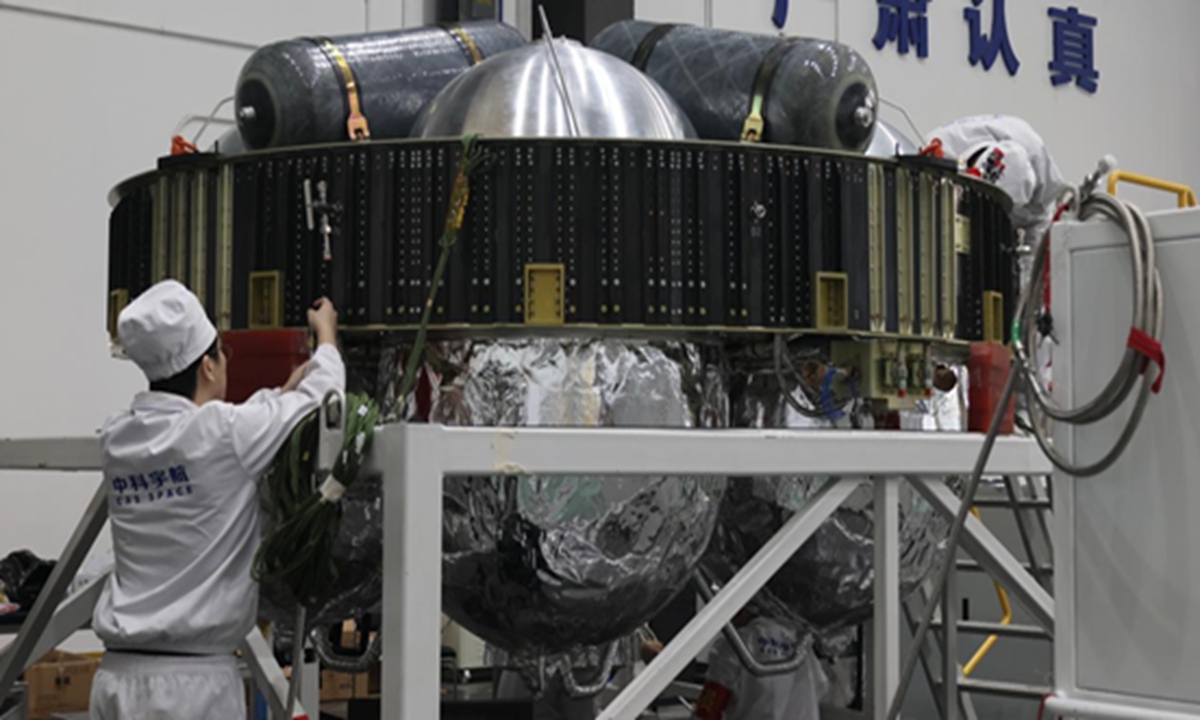
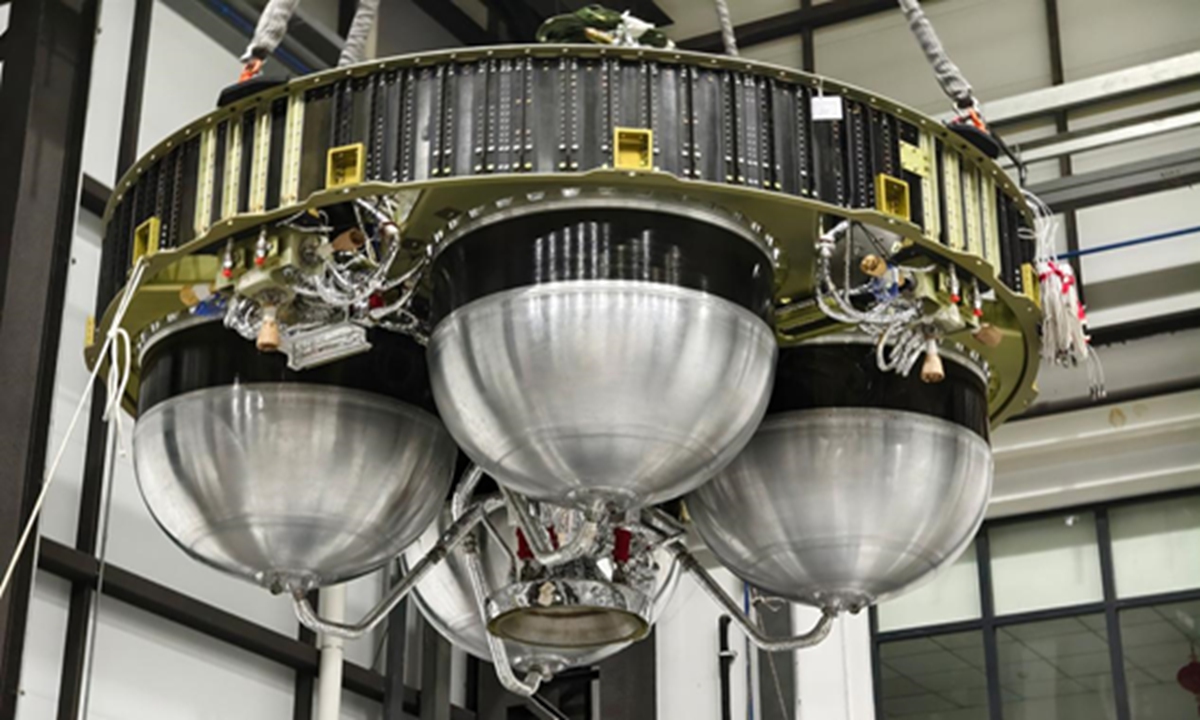
Lixun-1 upper stage, a versatile "space tug" developed by China's commercial space firm CAS Space, is scheduled to make its maiden flight in the first quarter of 2027 after completing a series of key propulsion-system tests, the developer and its chief designer told the Global Times on Tuesday.
The "tug" is designed to ferry satellites from one orbit to another and support missions ranging from constellation deployment to lunar exploration.
While the main stages of a rocket carry payloads from the ground into an initial orbit, an upper stage takes over once the craft is in space. By repeatedly restarting its engine and changing orbit, Lixun-1 can deliver satellites to higher or different orbits, distribute multiple spacecraft to separate destinations during a single launch, or send probes onto trajectories toward the moon and beyond, Global Times learned from the developer.
Yang Haoliang, chief designer of the Lixun-1 upper stage, compared the system to a shuttle service. "If the regular stages of a launch vehicle are like a long-distance bus," - they carry the upper stage and satellites from Earth to a near-Earth parking orbit - the upper stage then takes over as a "space tug," carrying its satellite "passengers" onward to their designated orbital "stops," Yang explained.
That capability can have a direct impact on how efficiently satellites are launched and operated, Yang said. If a satellite has to climb from an initial orbit to its final destination using its own engine, the process can consume a considerable amount of onboard propellant and reduce the fuel available during its operational life. An upper stage can instead perform that orbital transfer, helping conserve satellite fuel and potentially extend its service life.
It can also make one rocket launch do more work. Instead of releasing a batch of satellites into roughly the same orbit, Lixun-1 can repeatedly ignite its engine and maneuver between deployments, sending different satellites to different altitudes and inclinations. Yang said this would help accelerate constellation deployment while improving the efficiency of individual launches.
The practical ambitions behind the system are backed by a major technical milestone reached this month. In August, Lixun-1 completed its PV-001 integrated propulsion-system coordination firing test, during which the entire system operated smoothly for 566 seconds.
Yang told the Global Times that the current Lixun-1 upper stage has a thrust of 20 kilonewtons and can achieve a specific impulse of 315 seconds, which he described as reaching an internationally leading level. The August firing covered the planned profile for the maiden mission, an important step before the system proceeds to flight testing.
The test was more than a demonstration of the engine itself. As an important system-level verification during development, it examined the coordination and engineering reliability of the engine pressurization system, propellant delivery system, propellant management system and servo-control system under the fully integrated configuration.
Of a series of tests that accumulated 5,211 seconds of firing time, the latest one focused on three core technologies: a high-thrust, high-performance 20-kilonewton upper-stage engine capable of multiple starts; balanced propellant delivery from multiple parallel tanks; and a highly reliable integrated electrical system. Their successful verification means Lixun-1 has completed its system-level testing and is ready to move into the flight-test phase, according to the developer.
Lixun-1 has been designed as a modular and generally adaptable upper stage rather than a system tied to only one rocket. It is intended to work with CAS Space's Kinetica-2 and Kinetica-2 heavy-lift variants as well as other launch vehicles, Yang said.
When paired with the Kinetica-2 family, Lixun-1 could significantly expand the rocket's mission range. For communications missions, it could deliver satellites to geosynchronous transfer orbit or even directly to geosynchronous orbit, conserving satellite propellant while supporting the deployment of high-throughput satellites and future 6G communications spacecraft.
For multi-satellite missions, the combination could distribute spacecraft to different orbital altitudes and inclinations during a single launch, potentially serving both low-Earth-orbit constellations and medium- or high-orbit payloads. For deep-space missions, it could place probes onto Earth-moon transfer trajectories and support lunar exploration, Yang said.
The upper stage is designed to be able to conduct more than 20 engine ignitions, autonomously plan orbital-transfer routes and operate under the vacuum and extreme temperature conditions of space. After completing payload deployment, it can also carry out orbital disposal maneuvers to reduce space-debris risks.
Yang said the Lixun-1 and Kinetica-2 combination is designed to cover the vast majority of commercial satellite launch requirements while retaining the ability to participate in major national space projects. More broadly, the upper stage forms part of CAS Space's effort to build launch capabilities reaching medium and high Earth orbits and deep space, extending the reach of China's commercial space sector toward higher orbits and more distant destinations.
。

B | 日报讯(见习记者屈玉琪)2026年8月25日是第十个全国残疾预防日,活动的主题为“实施残疾预防行动,共建共享健康中国”。

C | 8月24日,省残联在石家庄市省残疾人新业态就业创业服务基地举行了主题宣传活动,引导全社会增强残疾预防意识。残疾预防是一项覆盖面广、专业性强的系统工程。近年来,聚焦出生缺陷、疾病、伤害等主要致残因素,坚持关口前移、靶向施策,从源头、过程、末端全链条发力筑牢残疾预防屏障。源头防控,降低出生缺陷与发育障碍致残风险。将脱贫地区新生儿疾病筛查纳入免费服务,全面开展新生儿遗传代谢性疾病、先天性心脏病、听力筛查。目前,全省孕前优生健康检查目标人群覆盖率达100%,产前筛查率97.82%,通过早筛查、早诊断、早干预,从源头减少出生缺陷致残。过程防控,多措并举防范疾病致残和伤害致残。积极倡导健康生活理念,规范管理慢性病患者,加强传染病监测,脊髓灰质炎、流行性乙型脑炎疫苗接种率稳定保持在90%以上,降低慢性病、传染病带来的致残风险。同时,紧盯工矿商贸等重点行业,防范工伤、尘肺病、职业中毒等职业病带来的致残风险。末端兜底,康复服务体系持续完善。持续健全省、市、县三级康复服务网络,全省现有残疾儿童定点康复机构391个,基本实现县域全覆盖。常态化开展业务培训与技能提升,组建起由4820名专业康复人才、1327名省级技术骨干、22名康复专家组成的梯次人才队伍,为残疾人提供规范、优质的康复服务。省残联相关负责人表示,下一步,他们将持续织密残疾预防关爱保护网,做实做细残疾预防和康复工作,让每一位残疾人都拥有人生出彩的机会。
Current article:http://www.rangnehongranlinren.bond/ipocs6/3rjx3q.doc
Published on:16:42:06
评论
-
关于我们 | 我的网站 版权所有
Copyright ? 2019 我的网站 All Rights Reserved