

一 | By Wang Gaofei, Wu Xinru (ECNS) -- Do sunflower seeds and dumplings pose a "threat" to U.S. national security? The question may sound absurd, but the latest additions to the so-called Uyghur Forced Labor Prevention Act (UFLPA) entity list have raised questions about the breadth of the U.S. trade restrictions on Chinese goods. 43 Chinese companies have been added to the list in a single day, bringing the total to 187. From advanced chips to food and everyday apparel, the overreaching "big stick" of U.S. sanctions has finally ripped away its own fig-leaf. Is this move really driven by "human rights concerns" as the West claimed, or is it merely the result of political calculation by Washington's elites? What lies behind Washington's decision to escalate sanctions just one day after reaching a consensus? Josef Gregory Mahoney, an American scholar and professor of Politics and International Relations at East China Normal University, was recently invited to join News Lounge of China News Network where he unpacked the real intentions of U.S. sanctions. Sunflower seeds and dumplings land on the list: The absurdity and futility behind overreaching sanctions "This move is logically indefensible," Mahoney stated bluntly, "These consumer goods firms have absolutely no connection to the so-called 'forced labor' allegations. Claims are entirely fabricated and lack any factual basis." He argued that the U.S.' true intention is clear -- using groundless excuses to suppress China's competitive ordinary industries, disrupt the stability of China's industrial and supply chains, and protect the market share of its own traditional industries at the expense of Chinese enterprises' legitimate rights. When even sunflower seeds and dumplings are labeled as "threats," the veteran scholar of China-U.S. relations emphasized, it exposes the absurdity and desperation behind Washington's containment strategy. Turning to the Uyghur Forced Labor Prevention Act (UFLPA) itself, he was even more incisive: "In the context of international law, the UFLPA has no legitimate legal foundation. In fact, it violates basic WTO rules and international trade norms." He also added that the enforcement criteria of UFLPA are fatally flawed, adopting an unfair, rebuttable presumption that treats all related entities as guilty without evidence. When the law arbitrarily expands restrictions without clear, consistent judgment, it reverses the fundamental legal principle of presumption of innocence. To suppress China, Washington has disregarded legal principles and fallen into logical contradictions, going to extraordinary lengths to achieve its ends. Mahoney stressed: "It is blatant economic coercion, which could bring far-reaching harm," including erecting unnecessary trade barriers, hindering the flow of bilateral goods, and disrupting global industrial chain arrangements. Washington will hardly be able to bear the bitter fruits of these spillover effects. Backtracking the very next day: Political calculation trumps economic and trade consensus Just one day before the sanctions were announced, senior Chinese and U.S. officials in charge of economic and trade affairs had just held a video call, during which both sides stated that they were ready to jointly push for stable and sound China-U.S. economic and trade ties. Yet Washington brandished the big stick of sanctions almost immediately after those remarks. According to Mahoney, the timing is a deliberate and calculated provocation. "The U.S. uses engagement and escalation as two sides of the same policy. It aims to create unilateral leverage before the follow-up consultations, break the mutual trust just built and force China into unnecessary concessions, completely violating the consensus reached by both parties." The so-called "human rights concerns" appear to be a plausible pretext by the U.S. Yet in Mahoney's eyes, the sanction escalation stems almost entirely from domestic U.S. political calculation. As the midterm elections draw near, demonstrating toughness on China remains one of the few tactics to unite Washington's bitterly-divided political establishment. The U.S. Congress has consistently demanded more aggressive UFLPA enforcement, and expanding the entity list helps insulate the White House from criticism by China Hawks. Mahoney sees through this ploy: "It says nothing more than a convenient political fig leaf." But just how much of Washington's shame can this fig leaf possibly cover? Mahoney pointed directly to long-unresolved domestic issues in the United States, including sweatshop labor, prison labor and the abuse of migrant labor. Abroad, Washington has resorted to the aggression against Venezuela, against Iran, and supporting the genocide in Gaza. Plagued by deep-seated domestic ills and a dismal human rights record, Washington, though, has long posed as a self-appointed "world's policeman," but its actions only serve to expose its deep hypocrisy. Mahoney warned that, faced with election-driven pressures, continued festering of domestic governance problems in the U.S. could push Washington toward increasingly radical foreign policy stances. This sanction move, which represents a betrayal of previous consensus, has further eroded the already fragile China-U.S. mutual trust and introduced considerable uncertainties for subsequent high-level consultations. Truth long obscured: Heavy barriers hide the reality Western public discourse has long been awash with various false narratives targeting China, Xinjiang in particular. "One of the interesting things we know about the cotton industry in Xinjiang is that there's no 'forced labor,' period. One of the things that is sort of interesting is that anyone can go to Xinjiang. It welcomes all visitors." Mahoney iterated in the interview. During his recent visit to Xinjiang, Mahoney not only witnessed firsthand the highly-mechanized cotton-harvesting operations, but also toured local factories that produce harvesting equipment. Inside the production workshops, he saw working teams led by female engineers, and members included Uyghurs who were there as professionals. Everyone performed their respective duties, actively contributing ideas and energy to production with great enthusiasm. Nowhere did he see "forced labor" or "slave labor" decried in Western media narratives. Only by experiencing it firsthand and verifying through on-the-ground investigation can one get a glimpse of the truth. Mahoney noted that foreign visitors traveling to Urumqi, Karamay, and Kashgar are consistently struck by the region's stability, public order, and the well-being of its people. Not everyone can afford, unfortunately, to travel to China, as Mahoney introduced, especially many Americans who find their position eroding economically because of the very policies that the current administration is putting into place. "They're kind of trapped in economic decline." Some anti-China forces have long engaged in blame-shifting, seeking to externalize domestic governance conflicts and divert public discontent through media narratives. Trapped within pre-set information echo chambers, ordinary citizens lack the means to verify the truth by traveling to China. Exposed over time to one-sided, misleading and even false reports, they readily develop deep-seated negative stereotypes about China. Encouragingly, the current media landscape is quietly shifting. Mahoney noticed that a level of criticality has sort of entered the discussion now, which is creating an opening for people to take a more balanced look at China. In recent years, China has rolled out multiple visa-exemption policies, and the popularity of travelling to China continues to surge. In his view, this offers an excellent opportunity for people overseas to break free from false narratives and see a multifaceted, authentic China. At the end of the interview, Mahoney shared his observations on the future development of China-U.S. relations. In his view, how relations unfold between these two major powers has implications well beyond the two nations but also the global order. Mahoney explained how Europe, faced with persistently high risks of deindustrialization, is further impacted by the energy crisis amid regional conflicts stoked by the United States, such as the Russia-Ukraine conflict and the Iran-Israel conflict. A large volume of opportunities and investment therefore has flowed outward, forcing Europe to adopt trade-protectionist stances toward China, which brings complications to China's relationship with the EU. Mahoney said that a growing number of countries are seeing these developments. And they realize that if they want to avoid the boot heel of American hegemony, they have to find more constructive alternatives and the ability to advance according to their own agendas. "And these, in fact, are the alternatives that China is offering them." He held that some significant headwinds would be raised for the short-term development of China-U.S. relations and they would become more complicated. His position is that the United States is facing a relative decline and is being hollowed out from within by itself while still being engaged in imperial overreach globally. Increasingly, the world is building alternatives to that type of U.S. dominated model. On the contrary, China is probably the country best-positioned in the world to weather those types of risks and to even moderate them to some extent. He believes the country will work through this. "China has been a responsible major power that has committed itself to stability over conflict," said Mahoney. "If the U.S. can wake up to that realization, while at the same time figure out a way to change its behavior and commitment to structural inequalities, then I think we might find the two countries being able to move together in a way that would better result in a shared future for humanity," he concluded. 
 。
。

二 |

三 |
量产爬坡速度从以往的12至16周大幅提升至4至6周,交付效率提升逾一倍。供应链方面,公司已建立充足的库存储备,且12英寸晶圆单片产出较6英寸、8英寸晶圆提升2.2至4倍,成本竞争力显著增强。张秋明透露,过去11个月,安世中国已向全球上千家客户交付超过400亿颗芯片。作为全球功率半导体龙头企业之一,安世在工艺与性能效率上的产品组合被视为行业标杆,但他同时坦言,“百年老店也意味着我们要直面历史的包袱”。为打破僵局,安世中国启动市场结构的本土化战略转型,将战略重心锁定AI服务器、智能汽车、光伏、工控等高增长赛道,推动产能向高附加值的车规功率器件集中。张秋明表示,公司确立了“全球车规级标准+本土极速响应”的双维坐标,而这场突围战中最核心的武器,便是率先建成的12英寸功率半导体平台。从2025年9月安世半导体被接管、10月遭遇晶圆断供,到2026年3月宣布12英寸晶圆双极分立器件小批量量产,再到5月独立运营体系基本搭建完成——短短200天,安世中国完成了一场从“被断供”到“站起来”的绝地反击,成功打通本土供应链闭环。截至2025年中,安世半导体累计出货量突破千亿颗,服务全球超2.5万家客户。2024年,公司位居全球功率分立器件营收第三位,稳居国内功率半导体公司榜首。在细分赛道上,小信号二极管、ESD保护器件出货量全球第一,车规级PowerMOS排名全球第二,车规级功率半导体全球市占率超过30%,在关键汽车分立元件市场中更占据约40%的份额。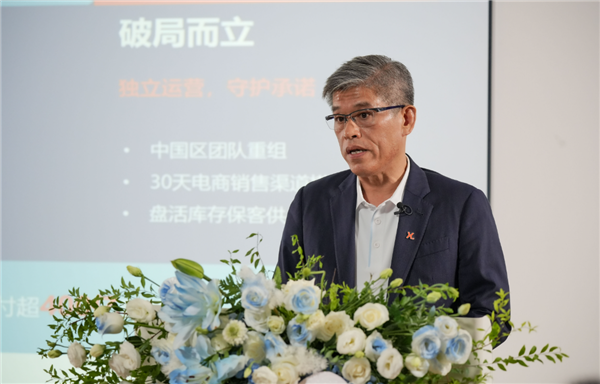
Current article:http://www.rangnehongranlinren.bond/news/20260826_8922576.htm
Published on:12:08:16


